
 By Stella Disuja
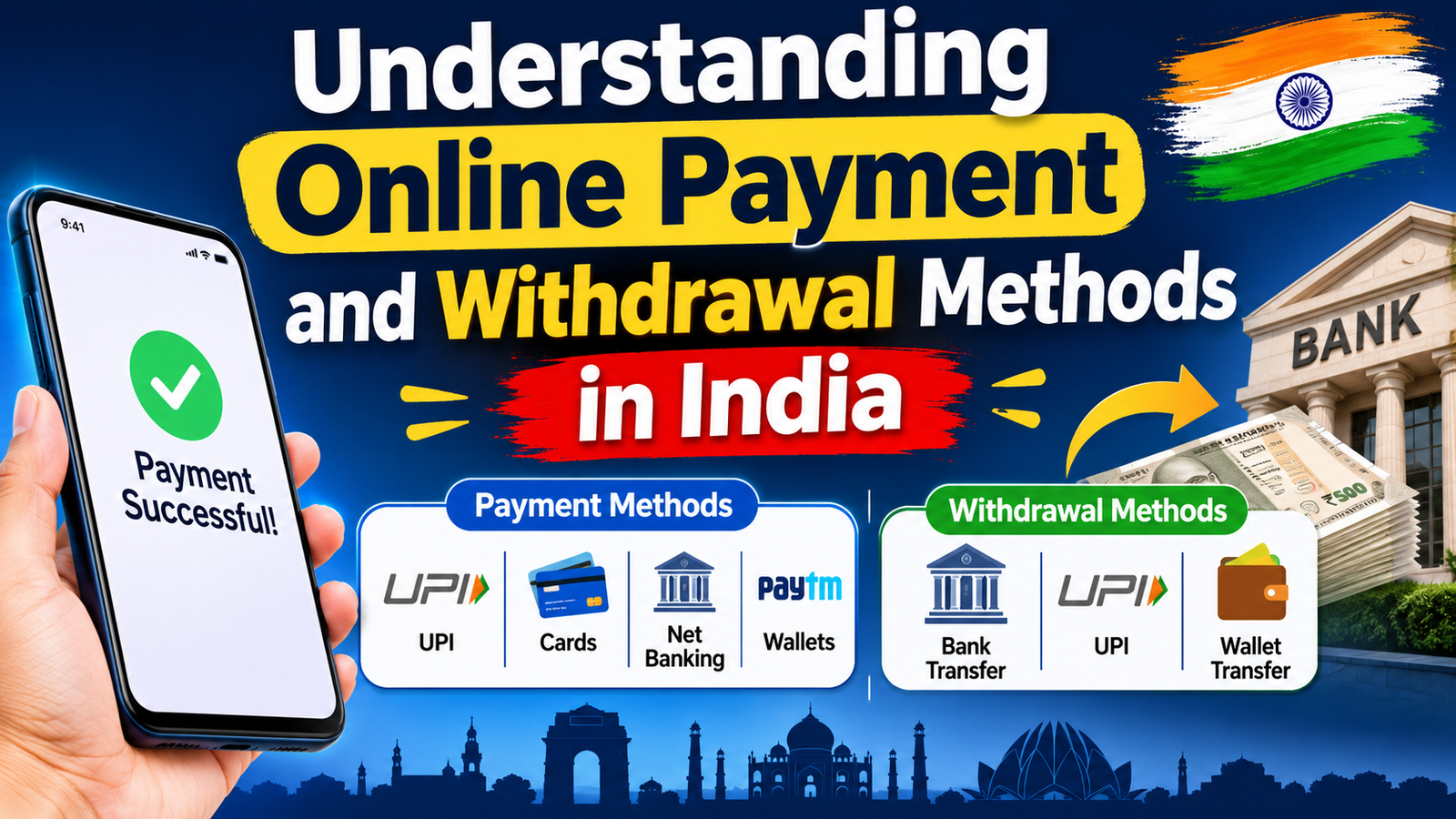
Digital payments have become an important part of everyday life in India. With the growth of internet banking, mobile wallets, UPI, and other digital financial services, people can now complete many transactions conveniently through their smartphones and computers.
Online platforms use different payment systems to support account transactions, subscriptions, purchases, and other services. Understanding how these methods work can help users make informed decisions and avoid unnecessary financial complications.
Before using any online service, it is important to review its payment policies, transaction charges, security measures, and withdrawal procedures. These factors are particularly relevant when dealing with platforms that involve financial transactions.
Why Online Payment Methods Are Important
Online payment methods make digital transactions faster and more convenient. Instead of visiting a physical location, users can complete eligible transactions through supported banking applications and payment services.
Different platforms support different payment options depending on their services and operating locations.
Some common advantages of digital payment systems include:
- Convenient transactions through mobile devices.
- Faster processing for supported payment methods.
- Digital transaction records for easier tracking.
- Reduced dependence on cash payments.
- Access to multiple payment options.
However, convenience should never replace security. Users should always verify the recipient and transaction details before confirming a payment.
Common Online Payment Methods in India
India offers several digital payment options. Each method has different features, processing procedures, and limitations.
1. Unified Payments Interface (UPI)
UPI is one of India’s widely used digital payment systems. It allows users to transfer money between supported bank accounts using compatible applications.
Transactions can generally be completed using a UPI ID, QR code, or other supported payment details.
Before confirming a transaction, users should verify the recipient’s information and the amount displayed on the payment screen.
Never share your UPI PIN or OTP with another person.
2. Internet Banking
Internet banking allows customers to manage their bank accounts and complete eligible financial transactions through their bank’s official website or application.
Depending on the bank, services may include account transfers, bill payments, and transaction history.
Users should access internet banking only through official banking channels and avoid entering credentials on unfamiliar websites.
3. Debit and Credit Cards
Debit and credit cards are commonly used for online purchases and other supported payments.
Debit cards generally deduct money directly from the linked bank account, while credit cards allow eligible purchases through an approved credit facility.
Always check transaction limits, additional charges, and refund policies before making a payment.
4. Digital Wallets
Digital wallets provide another way to manage supported online transactions. Depending on the service, users may be able to make payments, manage balances, and access transaction records.
Before using a wallet, review its terms, applicable limits, security features, and refund procedures.
Understanding Deposit and Withdrawal Processes
Deposits and withdrawals are two important parts of online financial transactions.
A deposit generally refers to adding funds to an account or service. A withdrawal involves transferring eligible funds back to an approved payment method or bank account.
Users researching self-deposit and withdrawal betting sites in India should carefully understand the legal restrictions applicable to such services before proceeding. The availability of a payment method does not establish that the underlying activity is legally permitted.
It is also important to check whether the platform clearly explains its transaction procedures, charges, eligibility conditions, and account verification requirements.
Important Factors to Consider Before Making Transactions
1. Transaction Security
Security should always be the first consideration. Use trusted payment applications and official banking channels.
Check that the website uses HTTPS encryption and has a clearly explained privacy policy.
Avoid sharing passwords, PINs, OTPs, or other confidential financial information.
2. Transaction Limits
Banks and payment providers may apply transaction limits depending on the account type, payment method, and applicable rules.
Before completing a transaction, check the current limits with your bank or payment provider.
3. Processing Time
Different payment methods may have different processing times. Some supported transactions are completed quickly, while others may require additional verification or processing.
Do not assume that every transaction will be completed instantly.
4. Fees and Additional Charges
Some services may apply transaction fees or other charges.
Review the payment terms carefully to understand the total amount involved. If a fee is not clearly explained, contact the official service provider before proceeding.
5. Account Verification
Financial services may require identity verification to comply with applicable regulations and security requirements.
Only submit documents through verified official channels. Never send identity documents to unknown individuals through messaging applications.
Common Online Payment Mistakes to Avoid
Digital payments are convenient, but careless transactions can create financial and security problems.
Avoid these common mistakes:
- Entering payment details on suspicious websites.
- Ignoring transaction fees and account limits.
- Sharing OTPs or banking passwords.
- Trusting unofficial payment representatives.
- Clicking unknown payment links.
- Ignoring transaction confirmation messages.
- Making payments without verifying the recipient.
Keeping transaction records and checking bank notifications can help users identify unexpected activity.
Tips for Safer Digital Transactions
A few simple habits can improve online payment security.
Use strong passwords and enable additional account protection wherever available. Keep banking applications updated and avoid completing financial transactions over unsecured public Wi-Fi.
Regularly review bank statements and transaction notifications. If you notice an unauthorized transaction, contact your bank or payment provider immediately.
In India, users can also report suspected cyber financial fraud through the official National Cyber Crime Reporting Portal or the 1930 helpline.
Final Thoughts
Online payment and withdrawal methods have made financial transactions more convenient across India. UPI, internet banking, cards, and digital wallets provide different options for completing supported transactions.
However, understanding payment procedures is just as important as choosing a convenient method. Security, transaction limits, processing times, fees, and account verification should always be reviewed carefully.
Users should also understand the legal requirements applicable to any platform involving financial participation. Making informed decisions and using verified payment channels can help create a safer digital transaction experience.